AI Risk Registers: What Every CTO Should Document
AI systems are rapidly moving from experimental pilots into core production workflows. As capabilities expand, operational maturity must expand with them.
One pattern I am increasingly encouraging teams to adopt is simple, yet powerful:
Maintain a formal AI risk register.
Traditional technology programs track security risks, infrastructure risks, and compliance risks. AI systems introduce an additional layer: probabilistic behavior, data sensitivity, emergent bias, and external model dependency.
A risk register makes these realities explicit.
Below are four categories every CTO should document clearly and review regularly.
1. Hallucination Risk
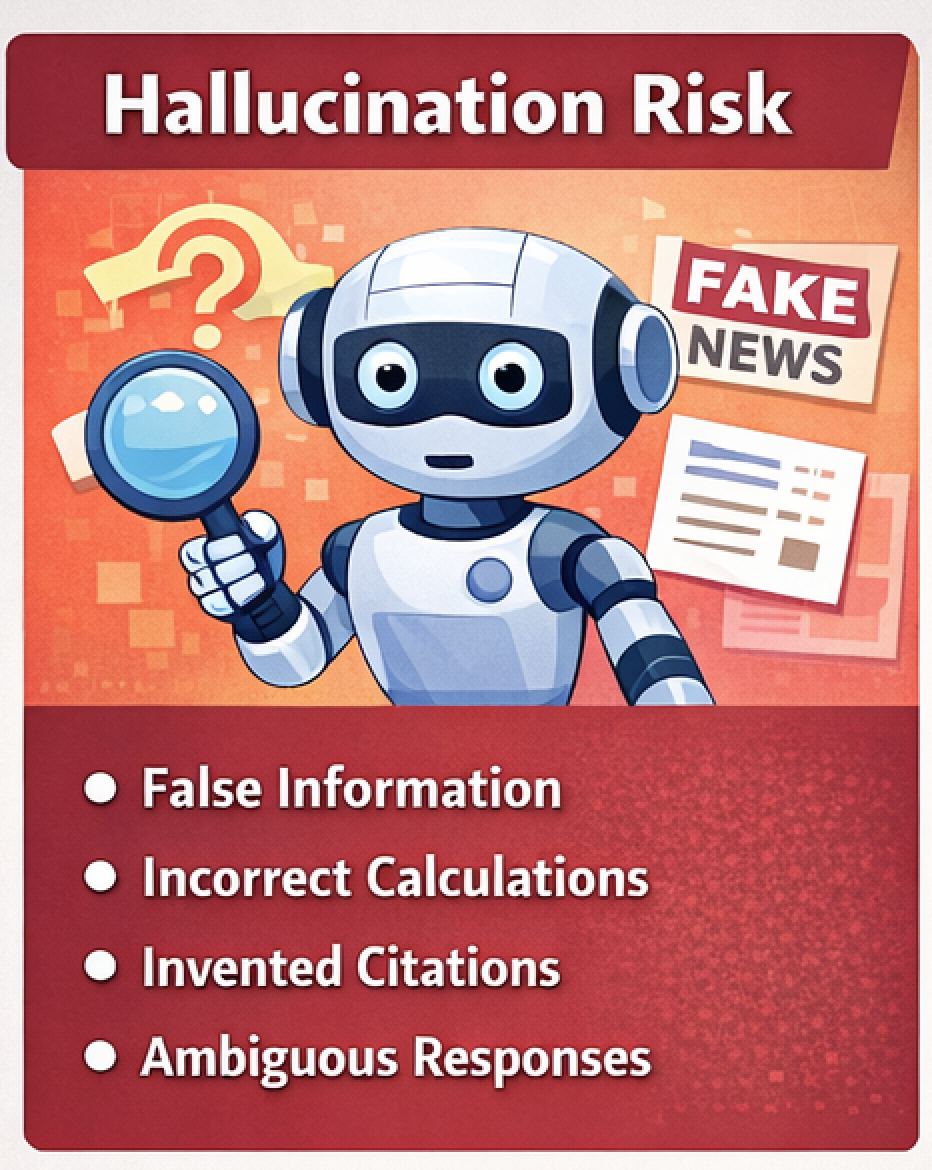
Large language models generate responses based on learned probability distributions. They do not verify truth unless the architecture forces grounding.
This means systems can produce:
- Fabricated facts
- Incorrect calculations
- Invented citations
- Confident answers in ambiguous contexts
What Should Be Documented
Failure Surfaces
- Which workflows rely on free form generation
- Where factual accuracy is critical
- Where numeric precision is required
Business Impact
- Regulatory exposure
- Financial misreporting
- Customer trust erosion
- Incorrect operational decisions
Mitigations in Place
- Retrieval Augmented Generation pipelines
- Confidence scoring thresholds
- Human review gates for high impact outputs
- Output validation for structured tasks
Monitoring Mechanisms
- Ongoing sampling audits
- Red team prompt testing
- Drift tracking across major use cases
The key question for leadership is not whether hallucination exists. It is:
Where can it cause material damage, and what guardrails exist today?
2. Data Leakage Risk
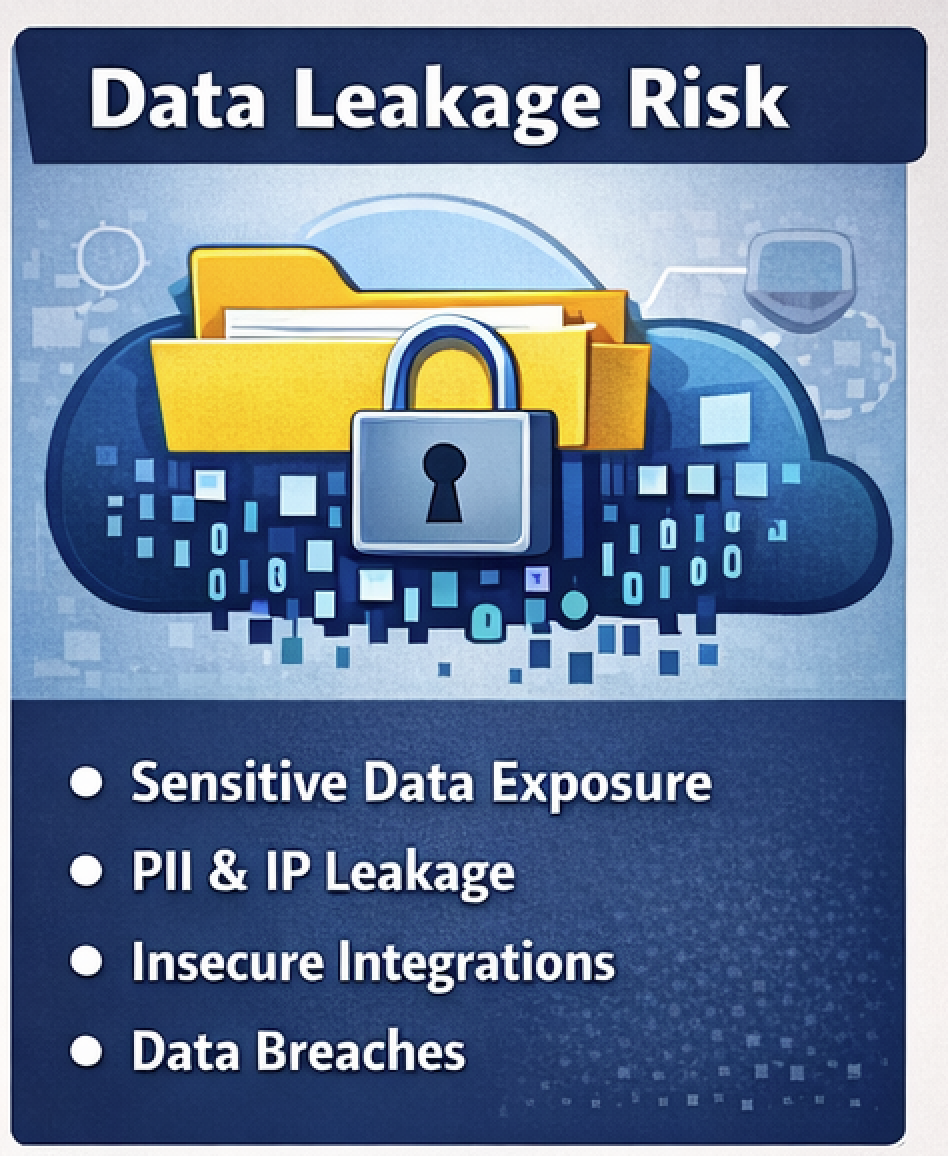
AI systems frequently process sensitive enterprise information:
- Customer records
- Internal strategy documents
- Source code
- Financial data
Risk emerges at multiple points in the pipeline:
- Prompt construction
- Logging systems
- Embedding generation
- Fine tuning datasets
- Third party model APIs
What Should Be Documented
Data Classification Policy
- What categories are allowed in prompts
- What categories are prohibited
Data Flow Diagrams
- Where data enters
- Where it is stored
- Where it leaves the boundary
Vendor Posture
- Data retention policies
- Model training usage terms
- Encryption guarantees
Operational Controls
- PII detection and redaction
- Token filtering
- Access control enforcement
- Log retention limits
If a CTO cannot visually trace sensitive data through the AI architecture, the risk register is incomplete.
3. Model Bias Risk
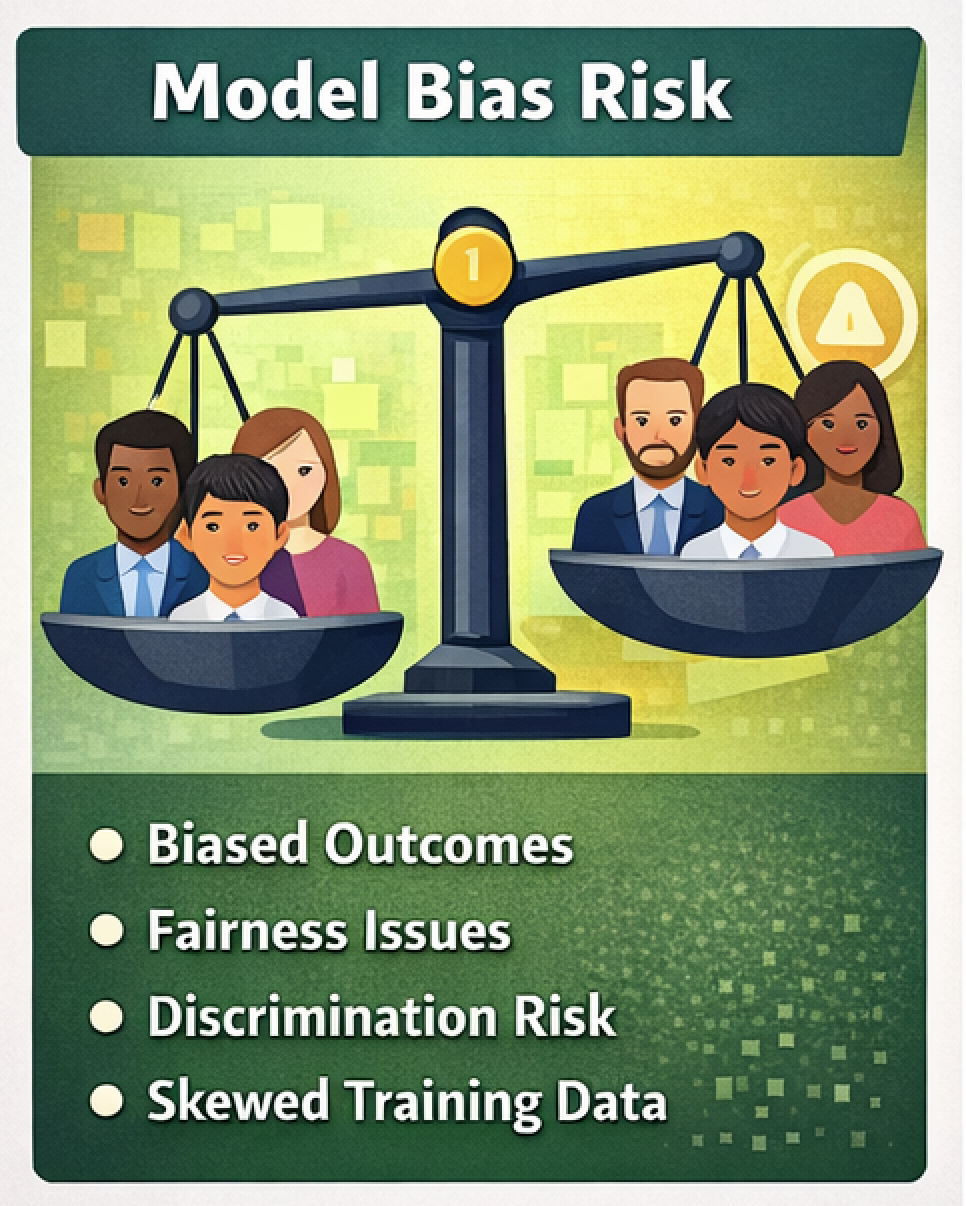
Bias in AI systems often originates from:
- Skewed training distributions
- Historical inequities embedded in data
- Reinforcement feedback loops
- Narrow evaluation datasets
When AI outputs influence decisions about people, bias becomes a governance issue.
What Should Be Documented
High Risk Use Cases
- Hiring assistance
- Credit evaluation
- Performance assessment
- Content moderation
Protected Attributes Potentially Impacted
- Gender
- Ethnicity
- Age
- Geography
Measurement Framework
- Subgroup performance metrics
- Fairness evaluation benchmarks
- Periodic bias audits
Remediation Plan
- Dataset rebalancing
- Prompt constraint updates
- Human escalation workflows
- Restriction of high risk use cases
Bias risk should not be handled reactively. It should be measured continuously.
4. Dependency Risk
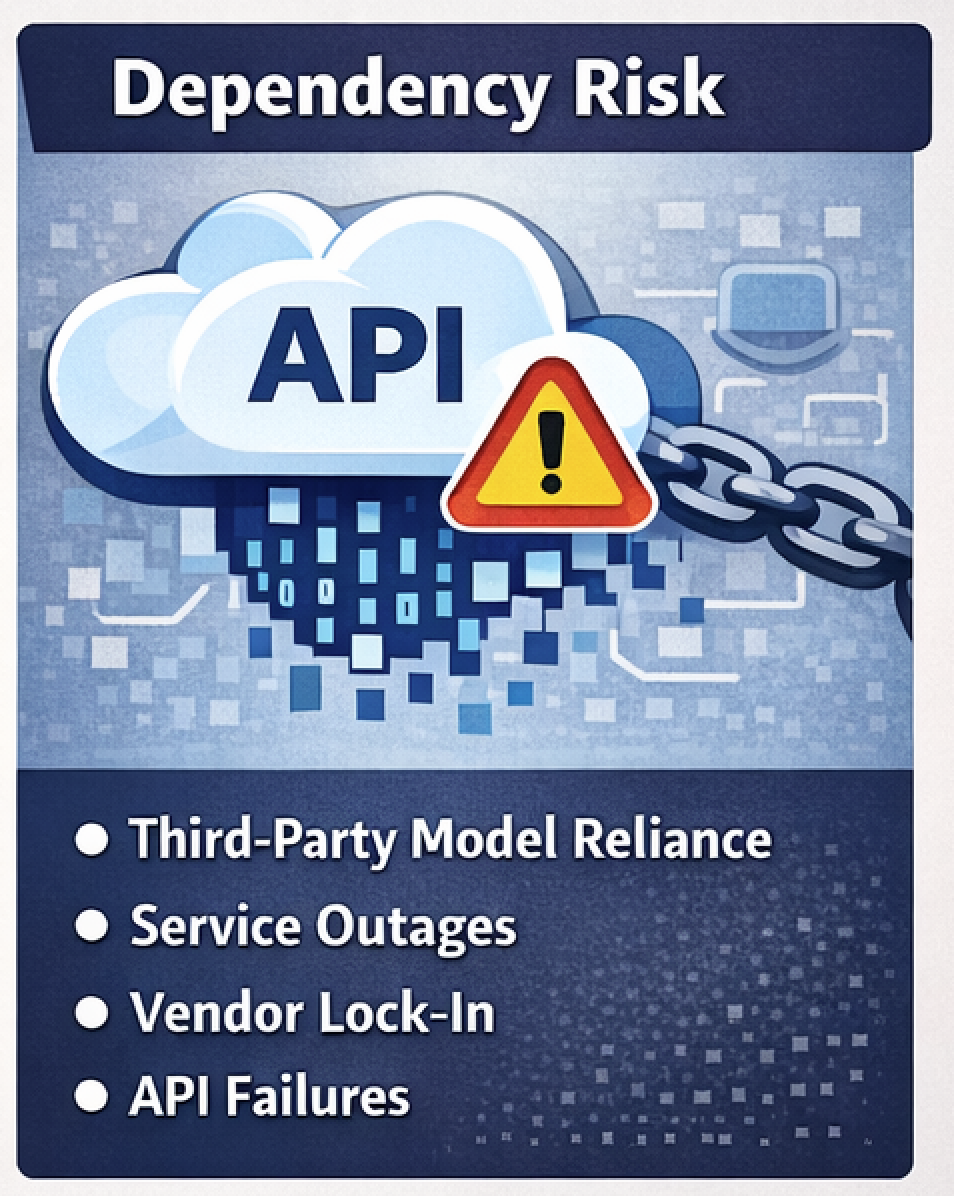
Most AI stacks today depend on:
- External model APIs
- Vector databases
- Orchestration frameworks
- Cloud infrastructure providers
This creates exposure beyond traditional application code.
Dependency risk includes:
- API rate limits
- Pricing volatility
- Model deprecation
- Regional outages
- Silent model behavior updates
What Should Be Documented
Single Points of Failure
- Where only one provider exists
- Where no fallback model is configured
Cost Sensitivity Analysis
- Monthly inference exposure
- Break even points under traffic growth
Versioning Control
- Whether models are pinned
- Change notification processes
Exit Strategy
- Portability of prompts
- Portability of embeddings
- Migration complexity assessment
Architectural resilience must include vendor strategy.
A Practical Risk Register Structure
Below is a simple template structure that can be operationalized:
Risk Category:
Affected Systems:
Description:
Severity:
Likelihood:
Mitigations:
Monitoring Approach:
Owner:
Review Frequency:
This should not live in a slide deck. It should live in an actively maintained operational system.
Closing Reflection
AI systems amplify both intelligence and risk.
Documenting risk does not slow innovation. It stabilizes it.
When AI becomes part of revenue workflows, compliance reporting, or customer decisioning, informal awareness is not enough.
A mature AI organization can clearly articulate:
- Where the system might fail
- Who is accountable
- How it is monitored
- How it evolves safely
An AI risk register is not bureaucracy. It is architecture for responsible scale.